Sports
Spanish police investigating after soccer player dies following on-field collision
By Jessica Martinez
Advertisement · Why this ad?
With a degree in Communications from West Chester University, Mark has over 10 years of experience in sports journalism, including a stint at WGAL News. He specializes in local coverage of the Lancaster Barnstormers and other regional teams.
More from Mark →
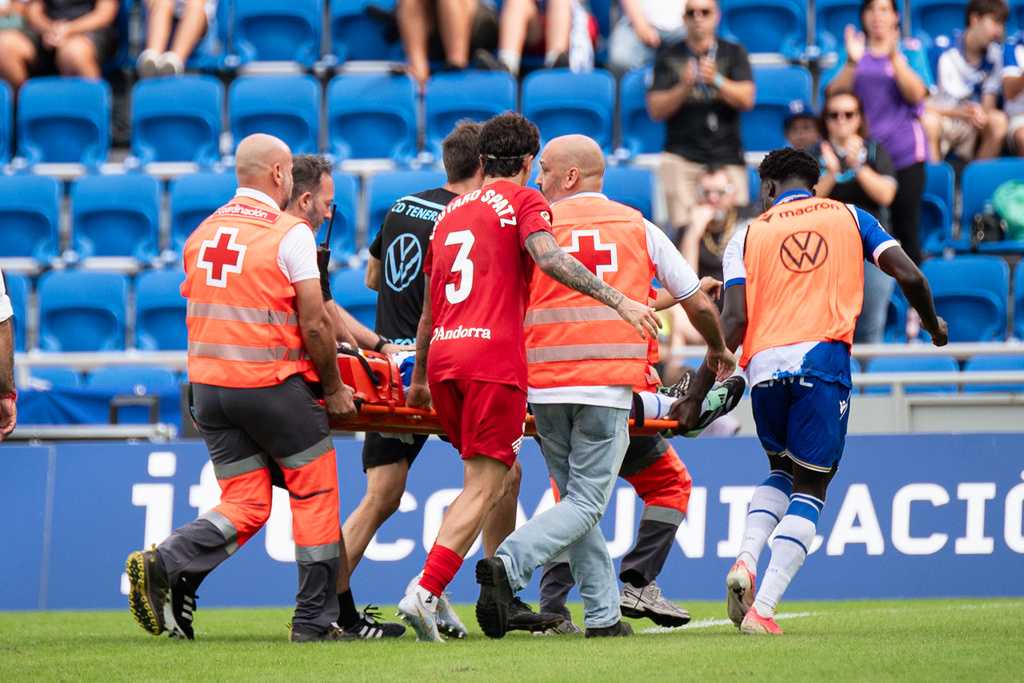
In the sunlit stadium of Andorra, the atmosphere was electric as fans cheered for their teams. But in a split second, joy turned to horror. Jesús de Miguel, a promising forward for Tenerife, lay motionless on the field after a collision with goalkeeper Jesús Owono. As paramedics rushed to the scene, the gravity of the situation became clear: this was no ordinary injury. Tragically, de Miguel succumbed to cardiac arrest, prompting an urgent investigation by Spain's National Police.
On a fateful day in late October, the match between Tenerife and FC Andorra took a devastating turn. Just before halftime, de Miguel collided with Owono, and what initially seemed like a standard play turned into a life-altering event. Despite the immediate attention from medical staff, the 27-year-old forward could not be revived. His untimely death has shaken the soccer community, raising questions about player safety and health protocols.
The incident occurred during a competitive match in the second division of Spanish football, where both teams were vying for crucial points. De Miguel had been in fine form, contributing significantly to Tenerife’s campaign. However, the collision with Owono, who was also left shaken by the event, led to a tragic end that no one could have anticipated.
Following de Miguel's death, Spain's National Police have launched an investigation to determine the circumstances surrounding the incident. This inquiry aims to shed light on whether proper medical protocols were followed and to assess the overall safety measures in place for players. Questions are being raised about the effectiveness of emergency response protocols in such high-stakes situations.
In recent years, there has been a growing concern regarding player health in professional sports, especially with incidents of cardiac arrest becoming more frequent. De Miguel's death is a stark reminder of the risks athletes face on the field, and it has reignited discussions about the need for stringent health checks and emergency preparedness in soccer.
The immediate response to on-field injuries is critical, and the role of medical staff cannot be overstated. In this case, the medical team on-site was equipped to handle emergencies, but the rapidity of de Miguel's cardiac arrest posed significant challenges. Emergency medical technicians (EMTs) are trained to respond to such crises, yet the effectiveness of their response can vary based on training, equipment, and situational factors.
Moreover, the presence of automated external defibrillators (AEDs) in stadiums has become a focal point in discussions about player safety. These devices can be lifesaving in cases of cardiac arrest, and their availability at sporting events has been advocated for by various health organizations. The investigation may explore whether an AED was readily accessible during the match and if it was utilized promptly.
The news of de Miguel's passing has reverberated through the soccer community and beyond. Fans, teammates, and fellow athletes have expressed their condolences and shared memories of the talented forward. Social media has been flooded with tributes, highlighting his dedication to the sport and his vibrant personality.
One fan, Maria Gonzalez, shared, "Jesús was not just a player; he was a beacon of hope for many young athletes in our community. His passion for the game inspired countless individuals to pursue their dreams. This loss is felt deeply, and we will remember him for his contributions both on and off the field."
De Miguel's legacy extends far beyond his statistics and accolades. He was known for his commitment to family and community, often participating in local events and youth training camps. His death has sparked conversations about the importance of mental health and emotional support for athletes, who often face immense pressure to perform.
As the investigation unfolds, the community rallies around de Miguel's family, offering support and sharing stories that celebrate his life. The outpouring of grief speaks volumes about the impact he had on those around him, proving that even in tragedy, the bonds of community can shine through.
De Miguel's passing has also highlighted the importance of soccer in the local culture of Tenerife and Andorra. Soccer is not merely a sport but a way of life for many in these regions. The loss of a player like de Miguel resonates deeply, as he represented not only his team but also the aspirations of many young players who look up to him. Local clubs may feel compelled to enhance their training programs, focusing on health and safety to prevent similar tragedies in the future.
Moreover, community leaders and soccer associations are likely to engage in discussions about how to better support young athletes. This incident may lead to initiatives aimed at fostering a safer environment for players at all levels, ensuring that health and safety protocols are prioritized in training and games.
For both Tenerife and FC Andorra, the implications of this incident are profound. As the investigation continues, both clubs are likely to reassess their health and safety protocols to ensure that such a tragedy does not happen again. This incident may lead to changes in how medical staff are trained and how emergency situations are handled on the field.
Moreover, the league itself may implement stricter regulations regarding player health checks, particularly focusing on cardiac health. With de Miguel's death serving as a catalyst, there is a strong possibility that the Spanish Football Federation will take a closer look at existing policies to enhance player safety.
In the wake of this tragedy, there is a growing call for better awareness and education surrounding athlete health. Coaches, players, and medical personnel must be equipped with the knowledge and tools to act swiftly in emergencies. This incident could serve as a turning point for the sport, emphasizing the need for a culture that prioritizes player well-being above all else.
As we reflect on the life of Jesús de Miguel, let us remember the joy he brought to the field and the inspiration he provided to many. His untimely passing serves as a reminder that while the game is important, the health and safety of the players must always come first. The hope is that through this tragedy, meaningful changes will occur that not only honor de Miguel’s memory but also protect future generations of athletes.
By Jessica Martinez
By Mark Williams

By Jessica Martinez

By Mark Williams